

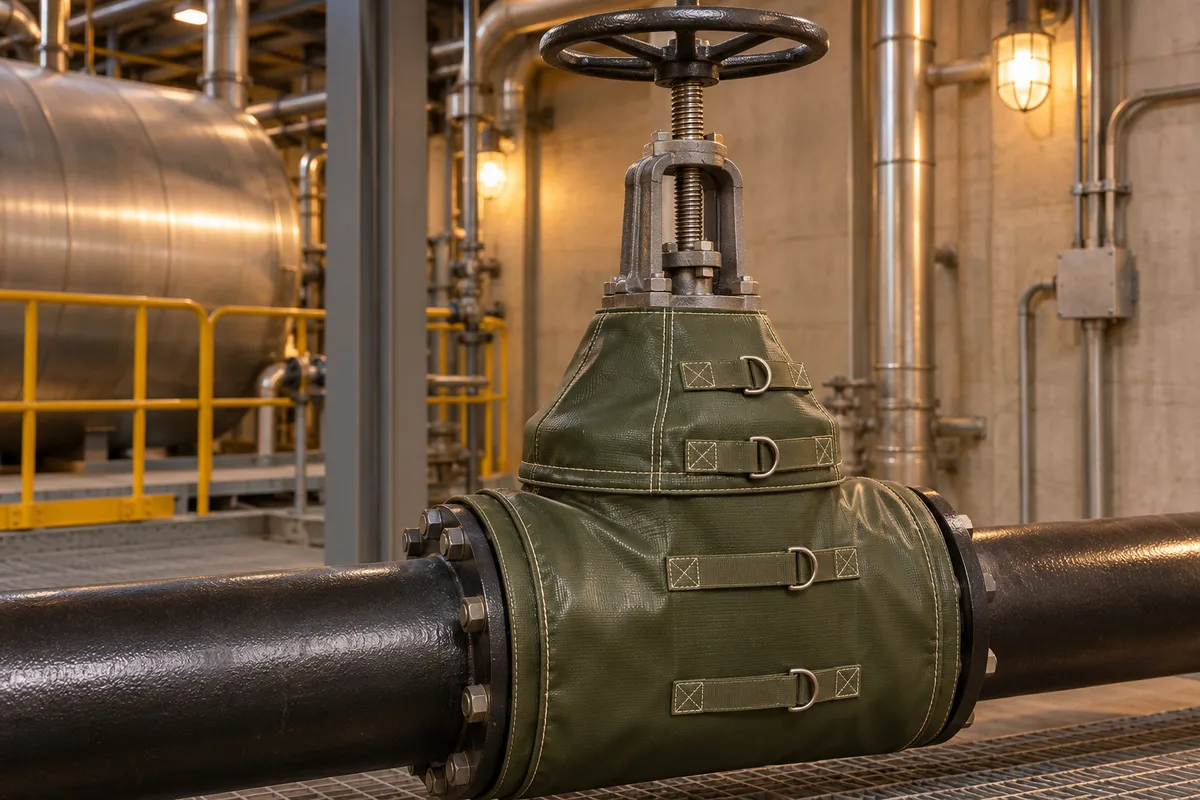
Removable gate valve insulation jackets
Cover the valve body and keep the rising stem and handwheel free to travel.
Split body and optional separate bonnet section
Specifications and thermal reference →Custom jackets for valves, flanges and process equipment. Review the fit, cover layers and removal path around the equipment your team needs to service.
One-piece inquiries welcome. Send a drawing or a photo with scale to start a fit review.
Compare the shape, materials and thermal objectives for each application.
Cover the valve body and keep the rising stem and handwheel free to travel.
Split body and optional separate bonnet section
Specifications and thermal reference →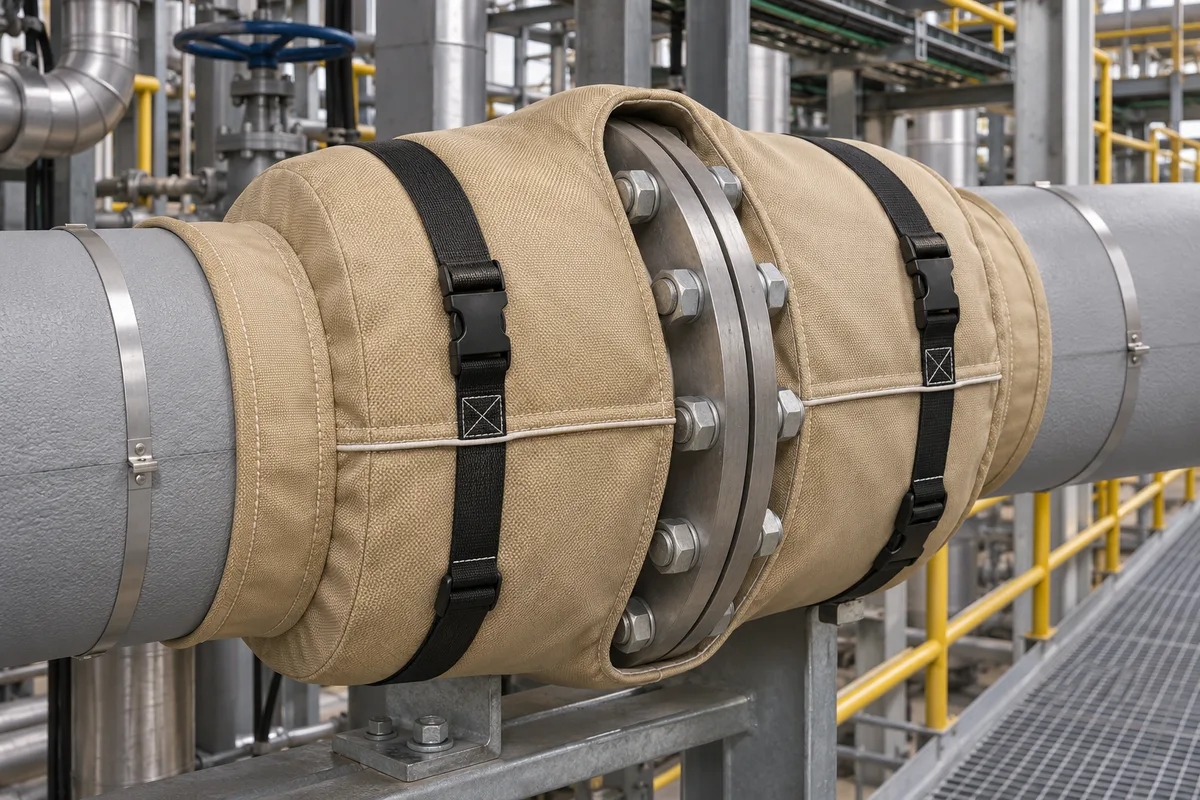
Remove the cover separately and regain bolt access.
Two half-shells with end collars and a side split
Specifications and thermal reference →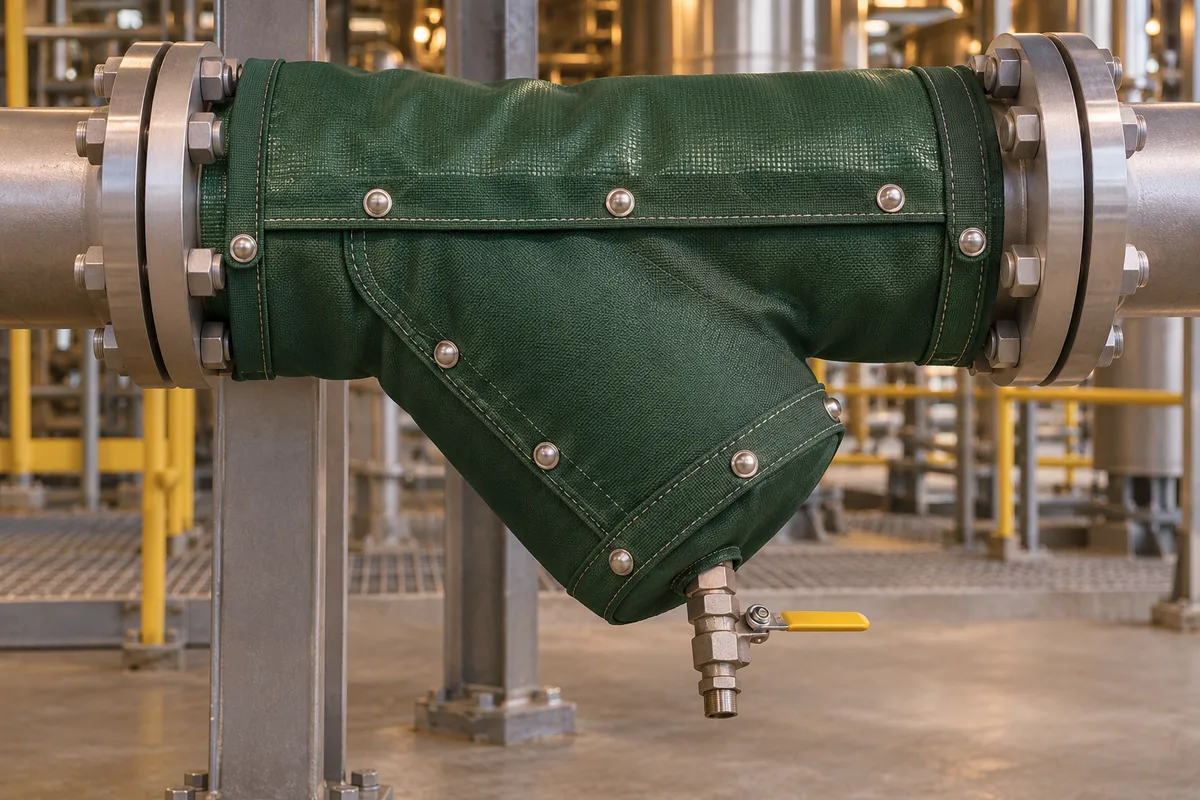
Keep the drain and screen withdrawal path clear for maintenance.
Shaped body and branch jacket with removable branch section
Specifications and thermal reference →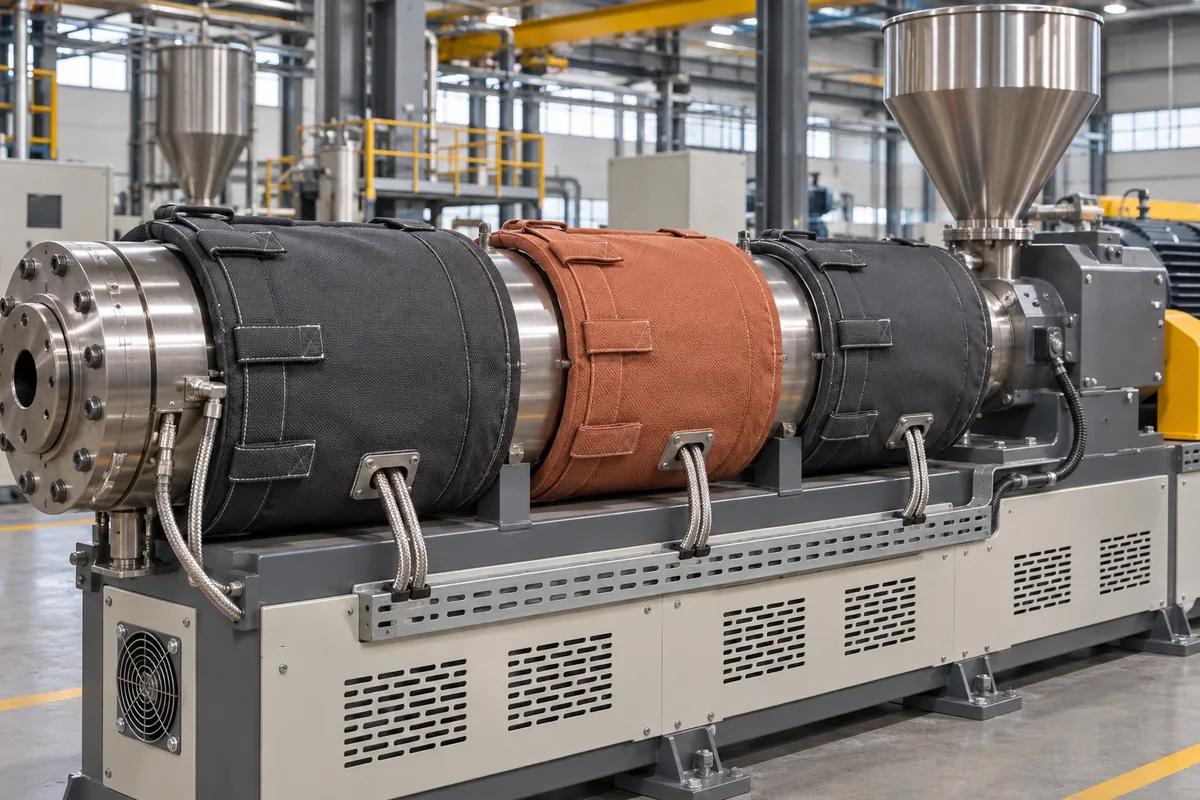
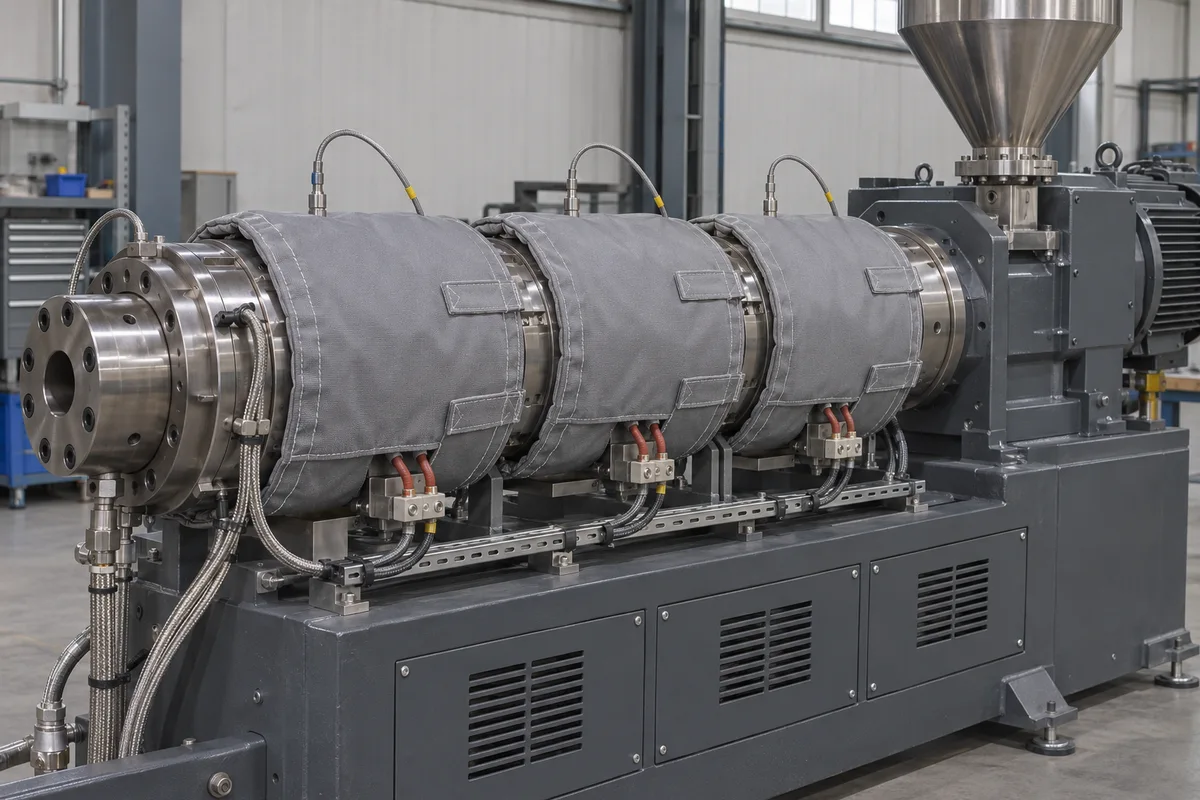
Wrap individual zones while keeping sensor leads, terminals and cooling paths accessible.
Individually removable heater-zone bands
Specifications and thermal reference →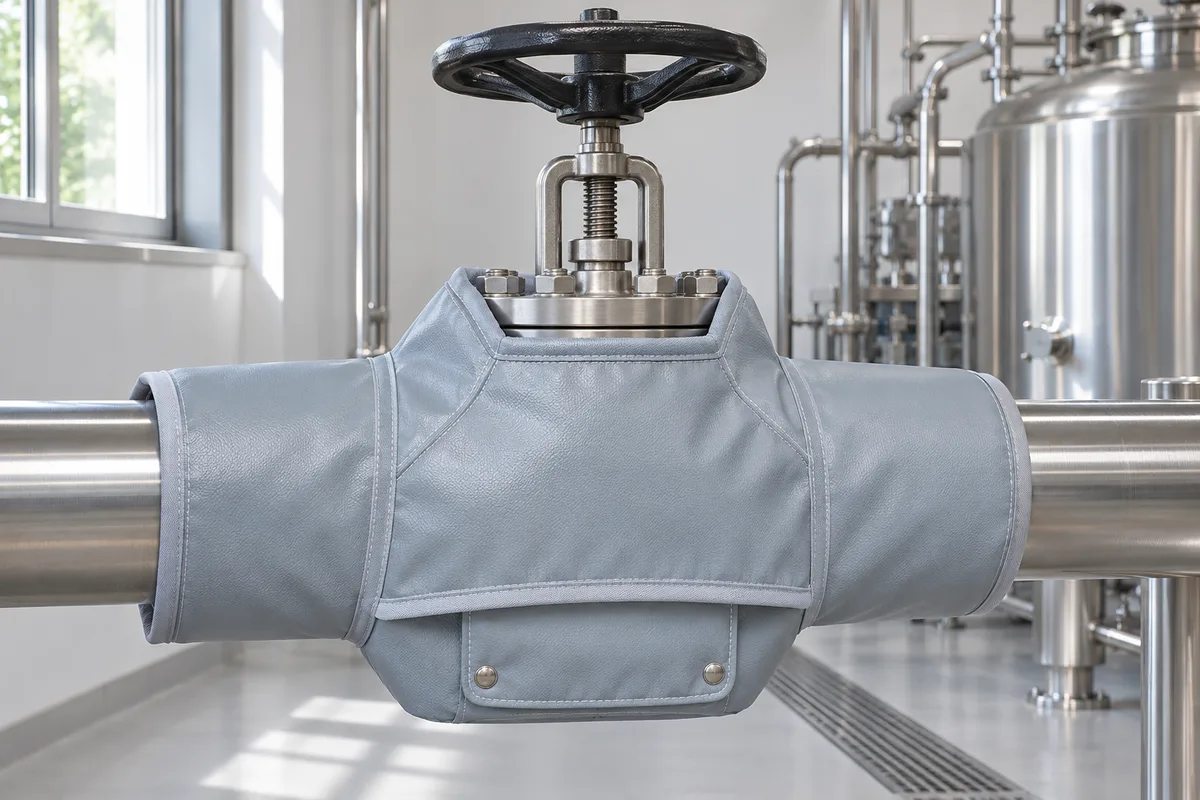
Plan a cleanable exterior and accessible valve hardware around the site’s washdown routine.
Shaped split jacket with a downward-facing overlap
Specifications and thermal reference →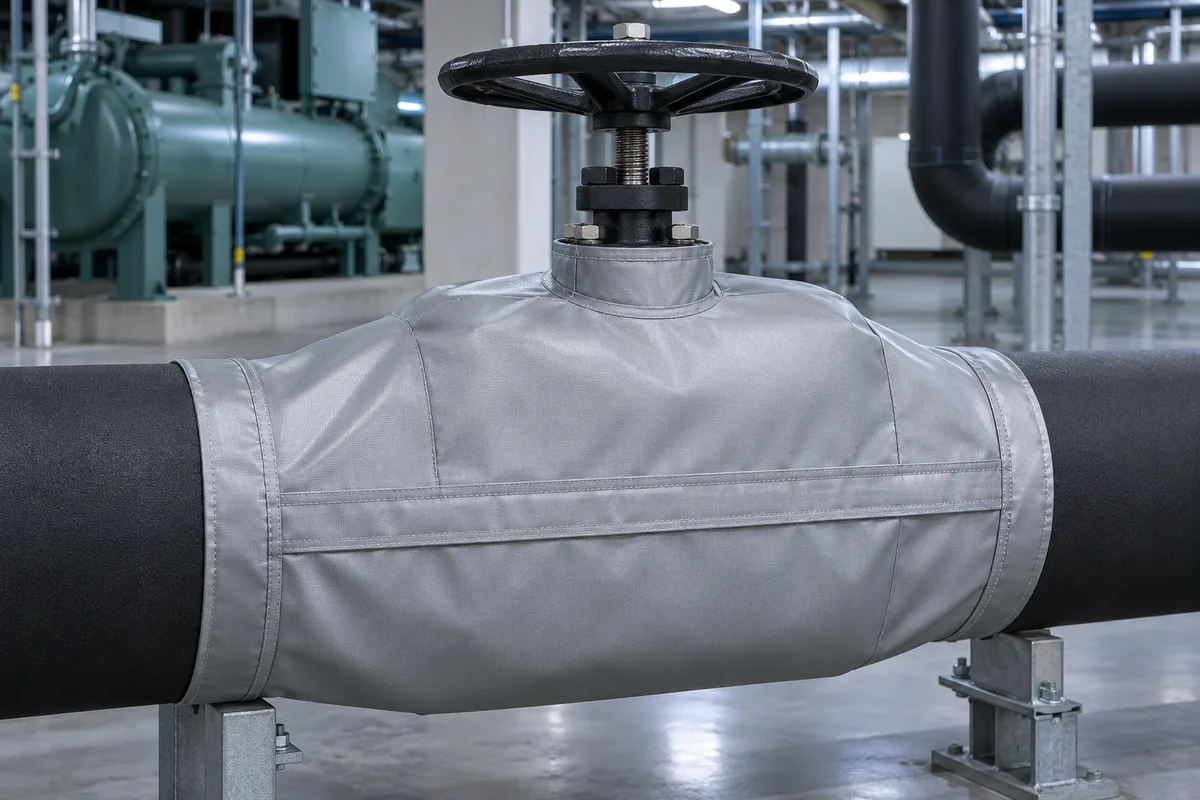
Plan a continuous vapour seal through seams, penetrations and pipe insulation transitions.
Serviceable insulated shell with resealable seams and end transitions
Specifications and thermal reference →Send equipment dimensions or photos with scale. Once the key measurements are available, we can prepare a CAD drawing or an annotated design for both teams to review. Use it to agree which surfaces to cover, what must remain accessible and how the cover comes off.
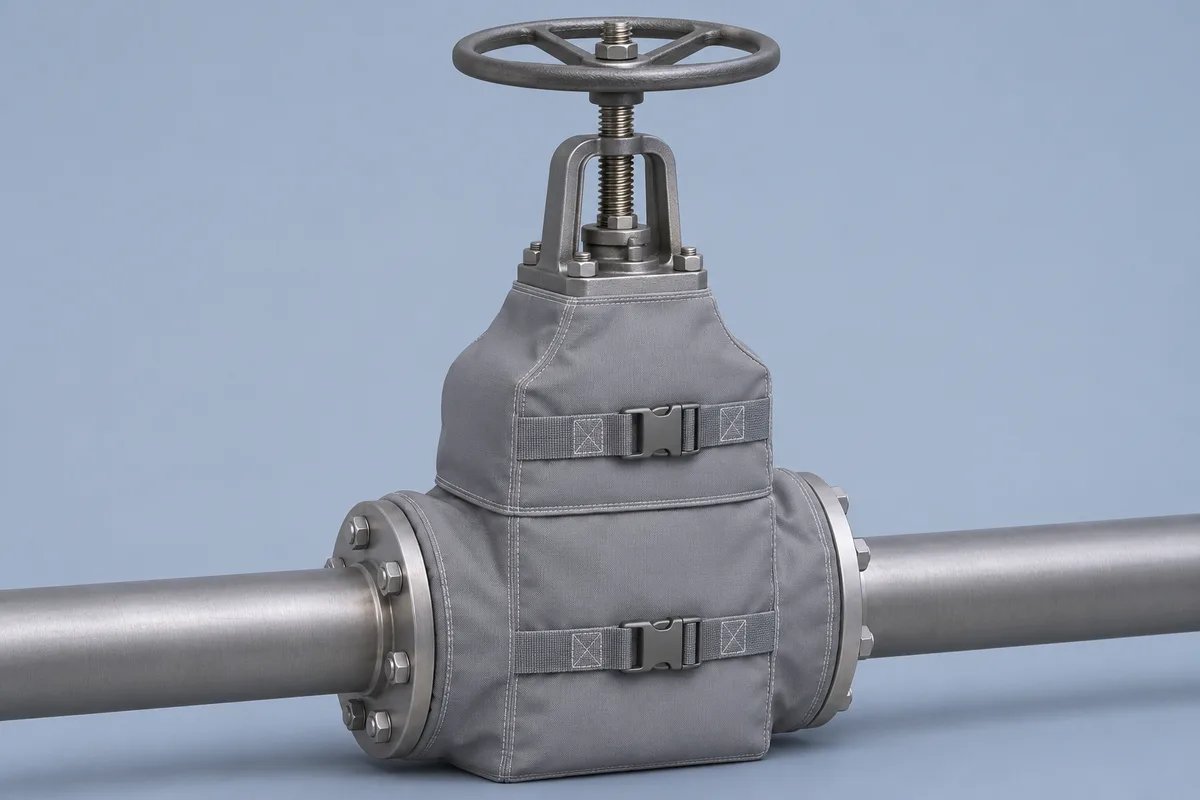
See how we review a drawing →Keep handwheel travel and packing access clear.
See the valve drawing →Check the working side, bolt access and removal path.
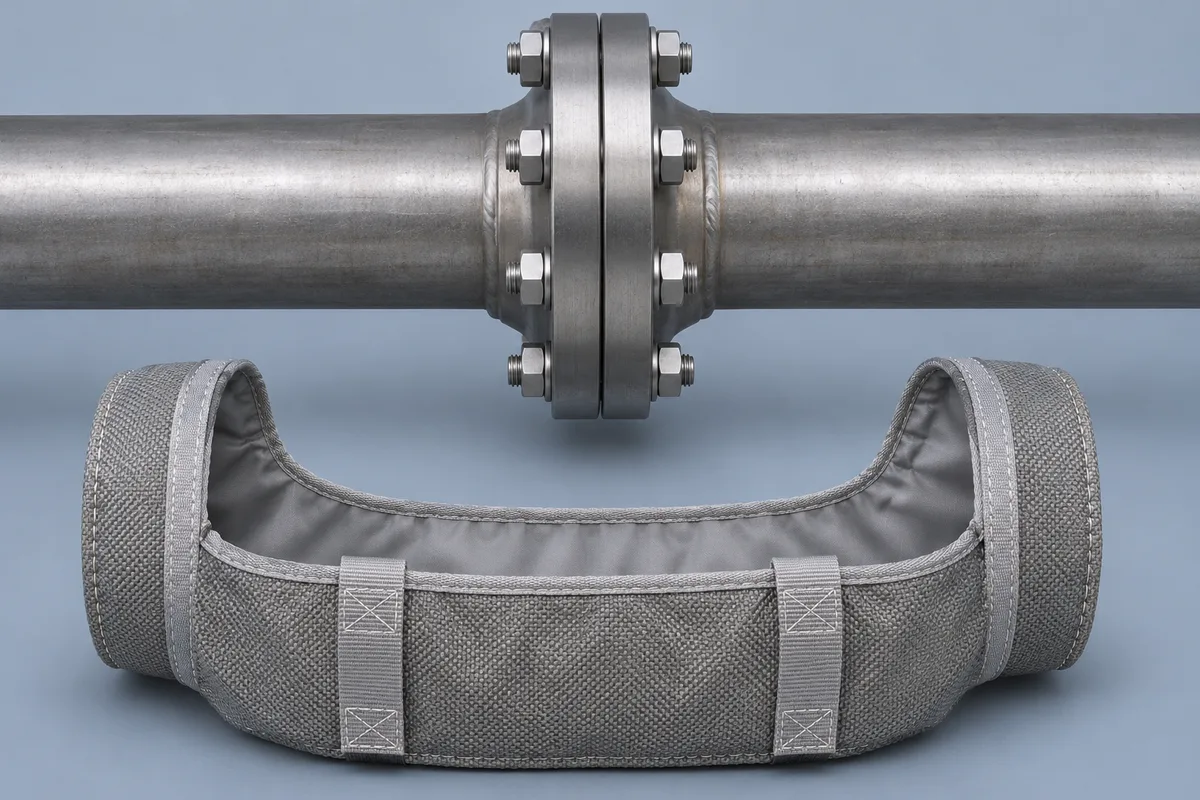
See the flange drawing →Compare the jacket shape, fastening and maintenance access.
Start with the equipment surface temperature and the result you need. Compare published thickness and outer-surface examples for steam, washdown and extruders. For chilled water, start with ambient humidity and dew point.
Compare thermal results →At 177 °C operating temperature and 21.1 °C ambient, Shannon’s flat-surface model estimates 47.3 °C outside-face temperature at 25 mm and 36.3 °C at 50 mm for its LT450SS jacket.
See the data and assumptions →Different operating conditions change the cover. Find the equipment, material choices and service constraints for your application.
Campus steam vaults, boiler rooms and distribution mains.
Boiler plants and utility steam serving sterilizers and water heaters.
Utility steam near pasteurizers, kettles and washdown zones.
Chiller rooms, chilled-water valve stations and hot-water loops.
Extruder barrel zones, heads and accessible process heaters.
Heat exchanger heads, process control valves and utility pipework.
Steam headers, pressure stations, access doors and pipe bends.
Repeat covers for custom machinery and irregular equipment housings.
Read published installations and worked scenarios that show what to ask, compare and check.
Third-party project · Thermaxx Jackets
Vermont, United States
Several steam components in a university mechanical room had been left bare after maintenance. The university wanted to reduce heat loss while retaining access to frequently serviced equipment.
Read the project note →Third-party project · Thermaxx Jackets
New York, United States
The brewery wanted to protect a 6-inch gate valve on an outdoor high-pressure steam line while keeping a removable cover for service.
Read the project note →Illustrative design scenario
A flange sits close to a wall and an overhead tray. The buyer can reach the bolts from one side but cannot lift a conventional full-depth cover vertically.
Read the project note →Send a drawing or a scaled photo. Mark anything the cover must clear and tell us how your team services the equipment.
Send your requirements →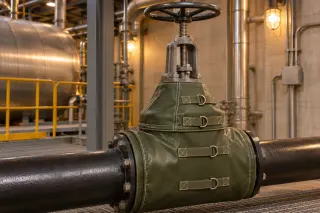 Gate valve
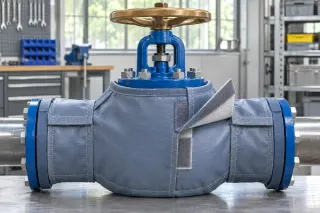 Globe valve
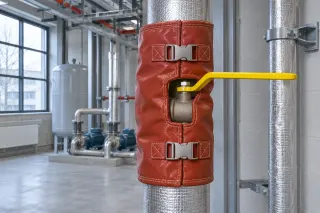 Ball valve
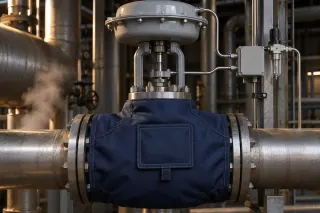 Control valve
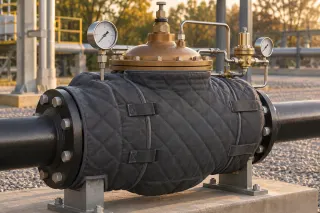 Pressure-reducing valve
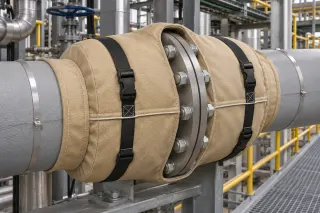 Split flange
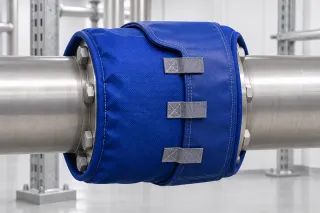 Wraparound flange
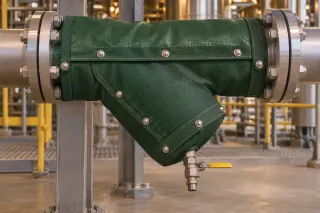 Y-strainer
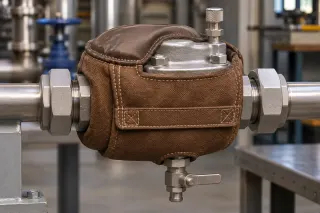 Steam trap
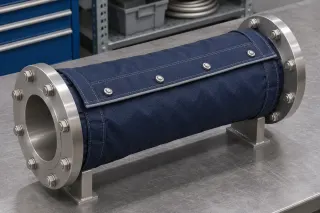 Pipe spool
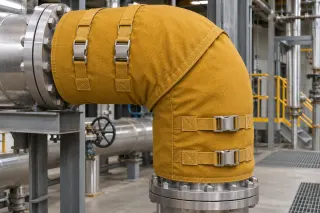 Pipe elbow
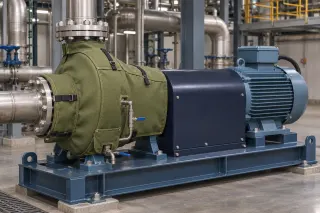 Pump casing
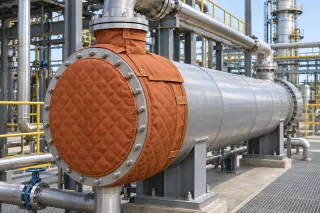 Heat exchanger
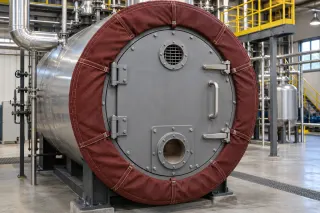 Boiler access door
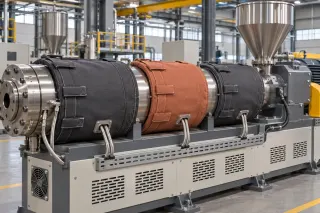 Extruder barrel
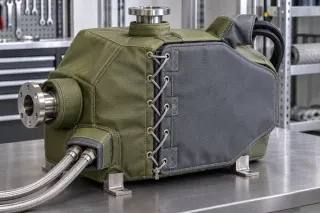 OEM equipment
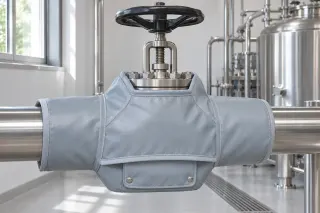 Washdown valve
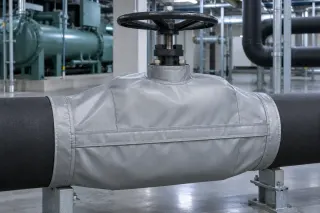 Chilled-water valve
Equipment and cover design illustrations