
How to check fit and access
Remove each half without moving adjacent insulation and verify access to both sides of the bolt ring.
Open the example review drawing →
See inspection and acceptance checks →Steam & hot water
Remove the cover separately and regain bolt access.
Bolted steam and hot-water connections opened for inspection or gasket work.
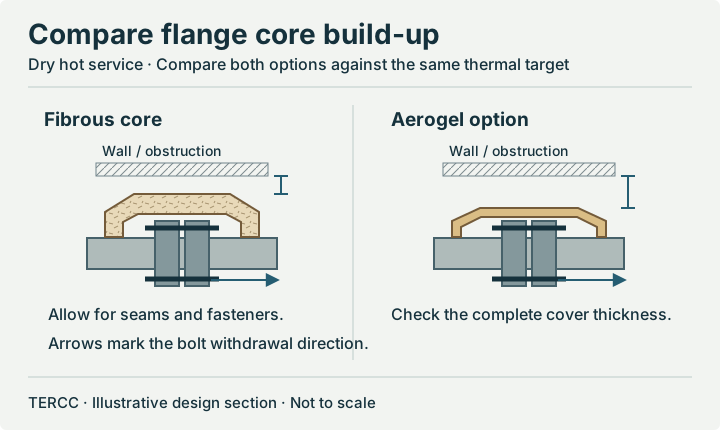
Start with the space the cover can occupy, then compare each build at the same heat-loss or outer-surface target.
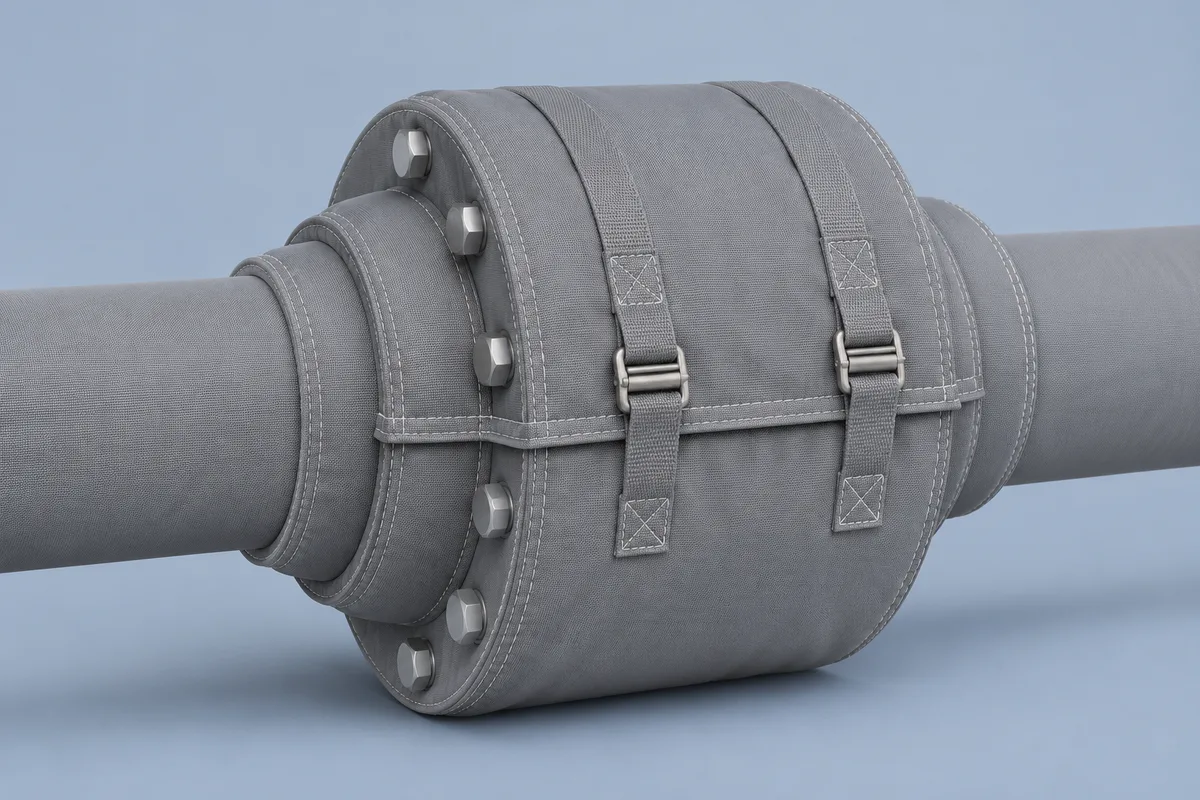
Compare alternate views and see how the jacket opens, fits or fastens.
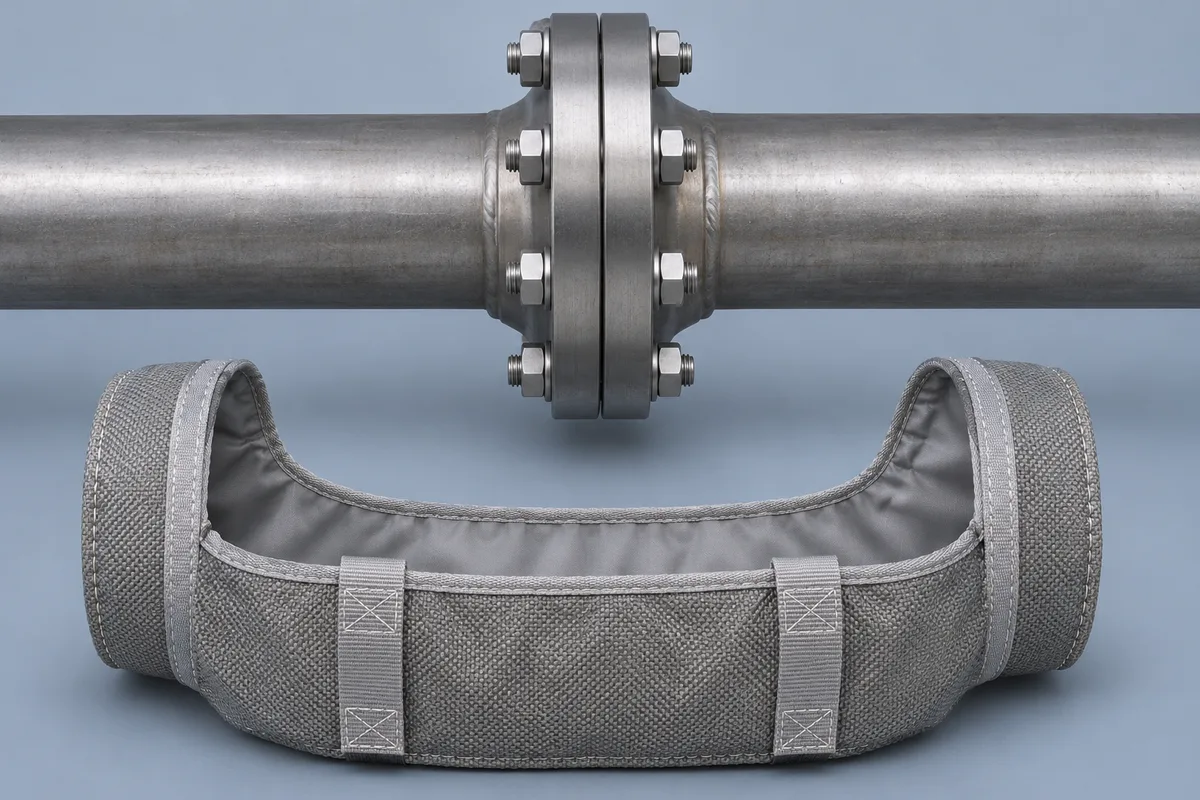
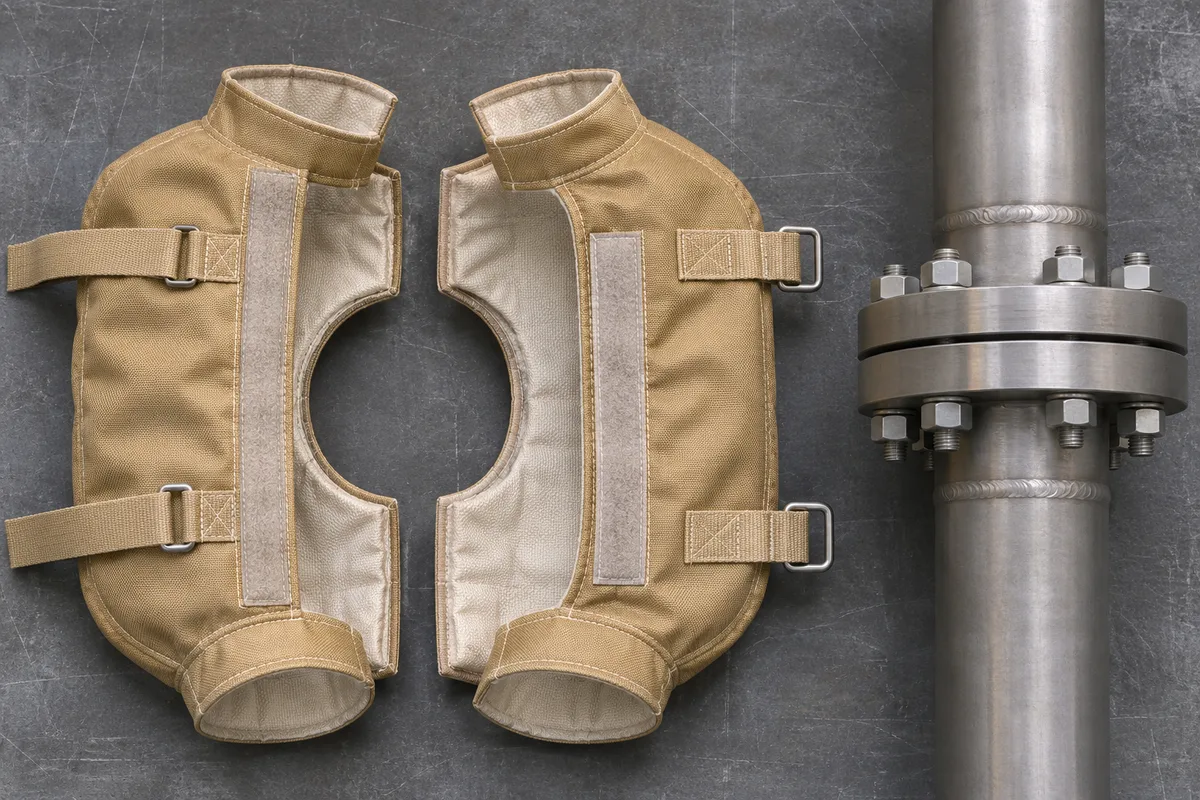
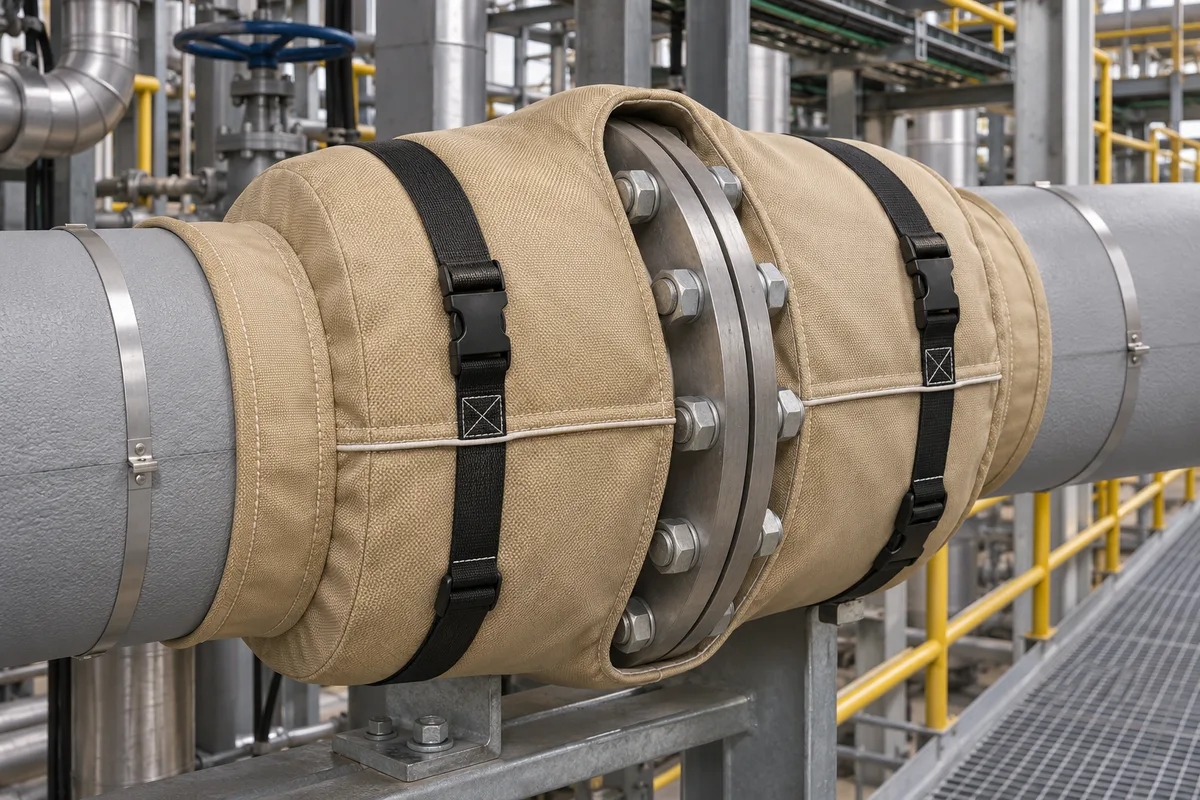
Two halves can come away separately, leaving the joint and bolt heads exposed for service.
These are options for a custom quotation. Confirm the assembled materials, dimensions, service limits and finish in writing.
inspect lining, end collars and the space needed for bolt access.
Compare the product views above ↑
Industry construction reference → · Aerogel stock thicknesses
Ask for a drawing showing bolt projection, the opening side and clearance to remove each cover section.
Request the facing, core and liner data sheets, the proposed core thickness and the operating conditions used for any surface-temperature estimate. The Thermaxx hot-jacket data sheet is a third-party example of how these conditions are stated.
Check heat loss at the joint and around the collars. Retain any inspection, drainage or leak-detection points required by the site.
Agree the conditions, measurement points and target for the proposed cover before quoting. Record the complete assembly’s approved service limits separately from the target outside-face temperature.
Compare thickness, surface temperature and heat loss →Calculated outside-face temperature for Shannon LT450SS at 21.1 °C ambient, flat-surface model. The manufacturer lists a maximum service temperature of 232 °C for this model. The columns show its nominal insulation thicknesses in millimeters and the manufacturer’s approximate inch equivalents.
| Operating temperature | 25 mm (1 in) | 40 mm (1½ in) | 50 mm (2 in) |
|---|---|---|---|
| 121 °C | 37.9 °C | 33.3 °C | 30.8 °C |
| 177 °C | 47.3 °C | 40.3 °C | 36.3 °C |
| 232 °C | 57.2 °C | 47.8 °C | 42.3 °C |
These figures describe the cited manufacturer’s model. Shape, airflow, compression, gaps and closures affect the installed result. A lower outside-face temperature still needs to be checked against your site’s contact and inspection requirements.
Read the manufacturer’s data →Remove each half without moving adjacent insulation and verify access to both sides of the bolt ring.
Open the example review drawing →
See inspection and acceptance checks →Measure flange outside diameter, full joint width with bolt projection, adjacent insulation OD and removal space.
Include a drawing or scaled photos, quantity and delivery location. Once the key measurements are available, we can review a CAD drawing or annotated design together.