
TERCCIndustrial insulation by TERUURequest a Quote
Material selection

Compare insulation jacket materials by service

Choose the facing, core and closures together. Specify equipment surface temperature, access, moisture and any required thermal or cleaning performance.

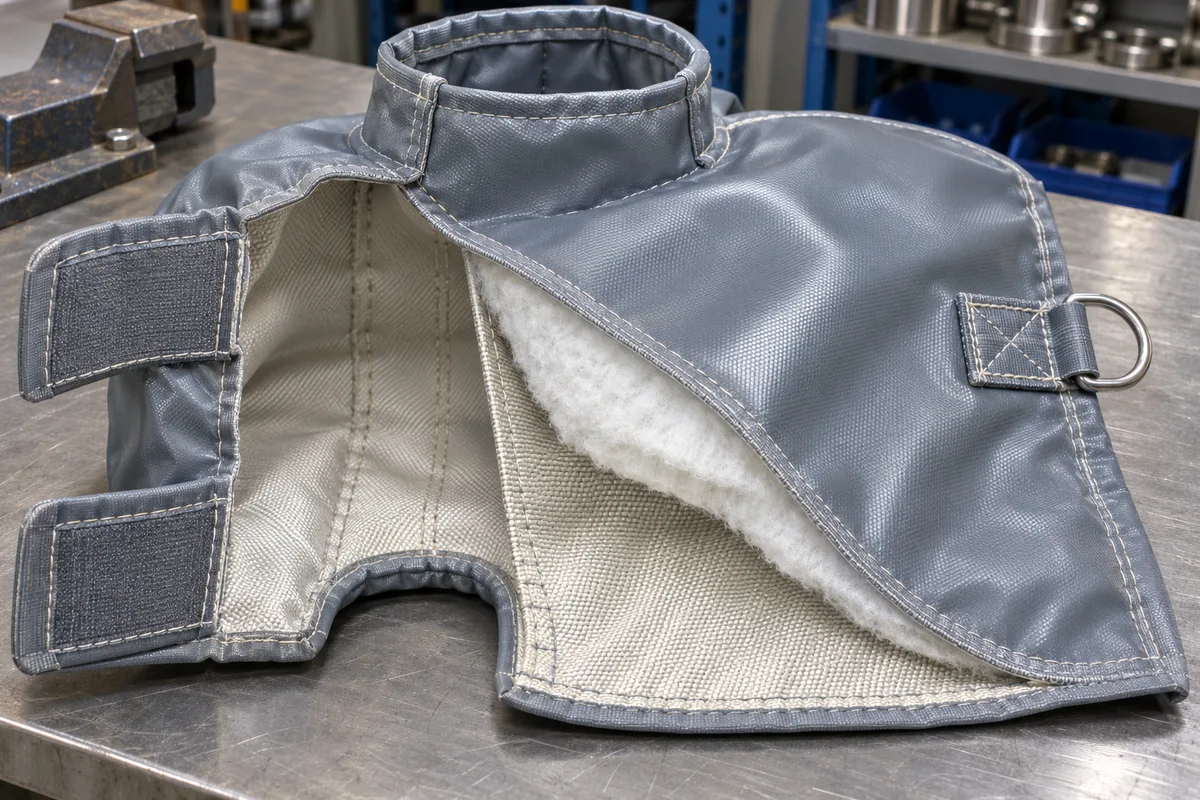
Opened hot-service jacket showing woven facing, fibrous insulation, hot face and D-ring
Woven facing and fibrous core · Design illustration
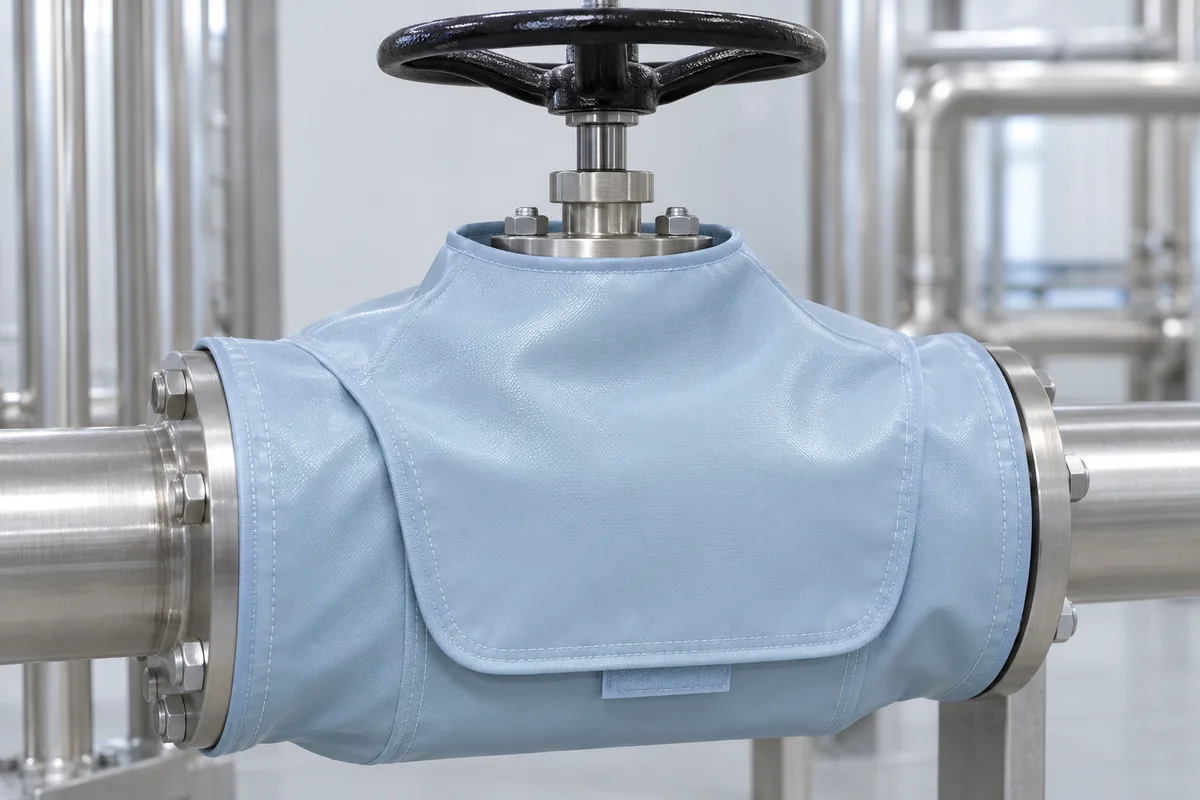
Smooth washdown jacket overlap and bound edge at a utility valve
Smooth laminated facing and washdown overlap · Design illustration
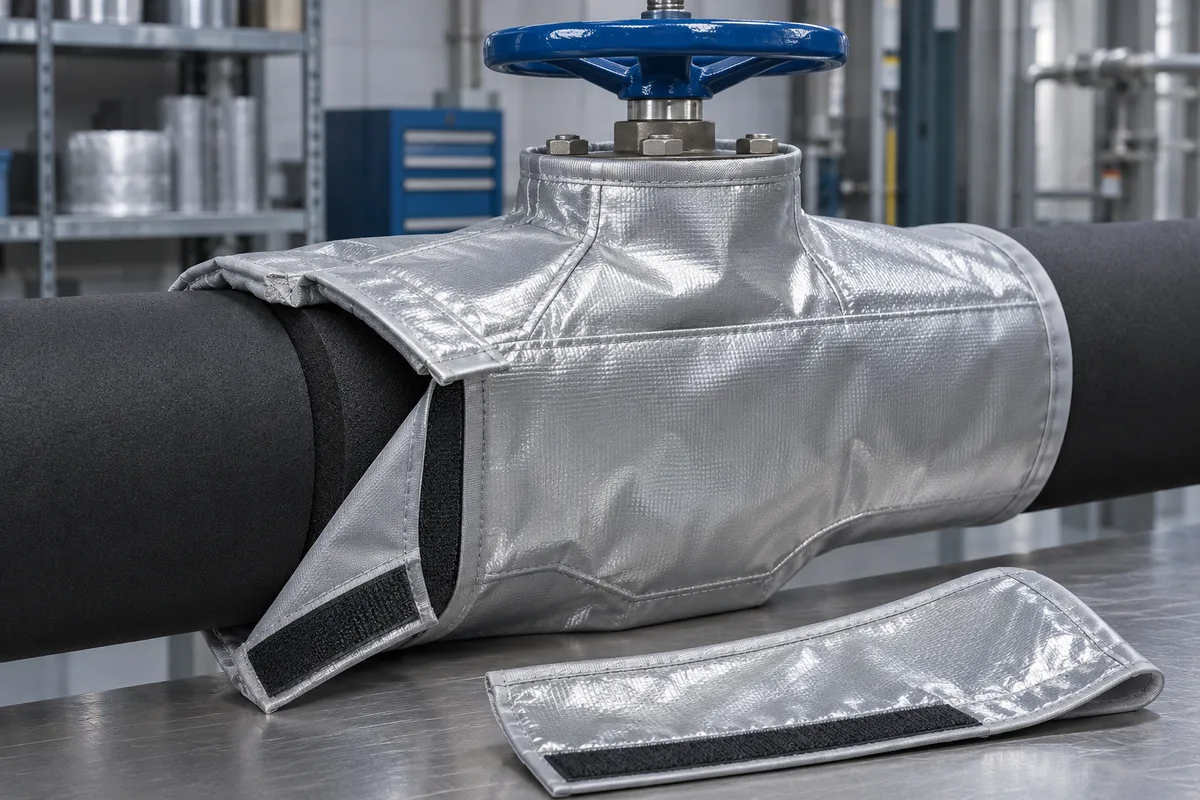
Cutaway showing closed-cell core, vapour-control facing and resealable seam at a cold valve
Closed-cell core and vapour-control closure · Design illustration

Silicone-coated glass-fibre facing

Role in the assembly
Outer or inner facing where the assembly rating permits
Where to consider it
Dry indoor hot service and general-purpose valve or flange jackets
What to check
Compare coating temperature, abrasion and stitch-seam exposure. Ask for data for the specific coating and fabric.
Published construction reference →

PTFE-coated or laminated glass-fibre facing

Role in the assembly
Facing for selected wet, chemical or washdown conditions
Where to consider it
Applications where cleaning chemistry and seam detailing drive selection
What to check
Confirm chemical compatibility, seam and closure construction, and any site-specific hygienic approval for the complete cover.
Published construction reference →

Mineral fibre or needled glass-fibre core

Role in the assembly
Fibrous thermal core
Where to consider it
Dry hot equipment with room for the required thickness
What to check
Compare conductivity at design temperature, bulk, compression and handling. Request separate core data for each proposed material.
Published construction reference →

Closed-cell elastomeric insulation

Role in the assembly
Core for selected chilled-water systems
Where to consider it
Condensation control where a continuous vapour seal can be maintained
What to check
Check minimum and maximum service temperatures, ambient dew point and the joint seal after repeated removal.
Published construction reference →

Silica or ceramic hot-face fabric

Role in the assembly
Hot-face layer for selected higher-temperature designs
Where to consider it
Process heaters or extrusion zones where documented surface temperatures call for it
What to check
Review the entire assembly: core, cold face, seams, thread and fasteners can have different limits.
Published construction reference →

Compare thickness at the same objective

For dry hot service, a nominal 25 mm fibrous core can be a starting point for a comparative quotation. Compare alternatives against the same heat-loss or outer-surface target and the same operating conditions. For chilled water, calculate against dew point and check how the vapour seal is restored after servicing.

Request a Quote →