How to check fit and access
Check for visible condensation at representative operating conditions, then repeat after removal and refitting.
See inspection and acceptance checks →Chilled water
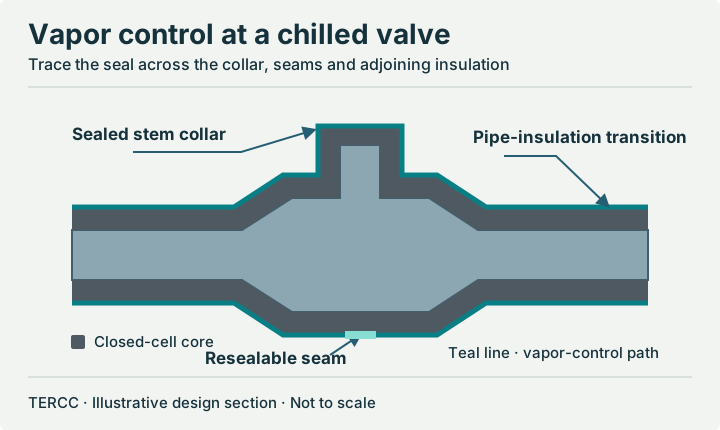
Plan a continuous vapour seal through seams, penetrations and pipe insulation transitions.
Chiller rooms and chilled-water valve stations where condensation is a concern.
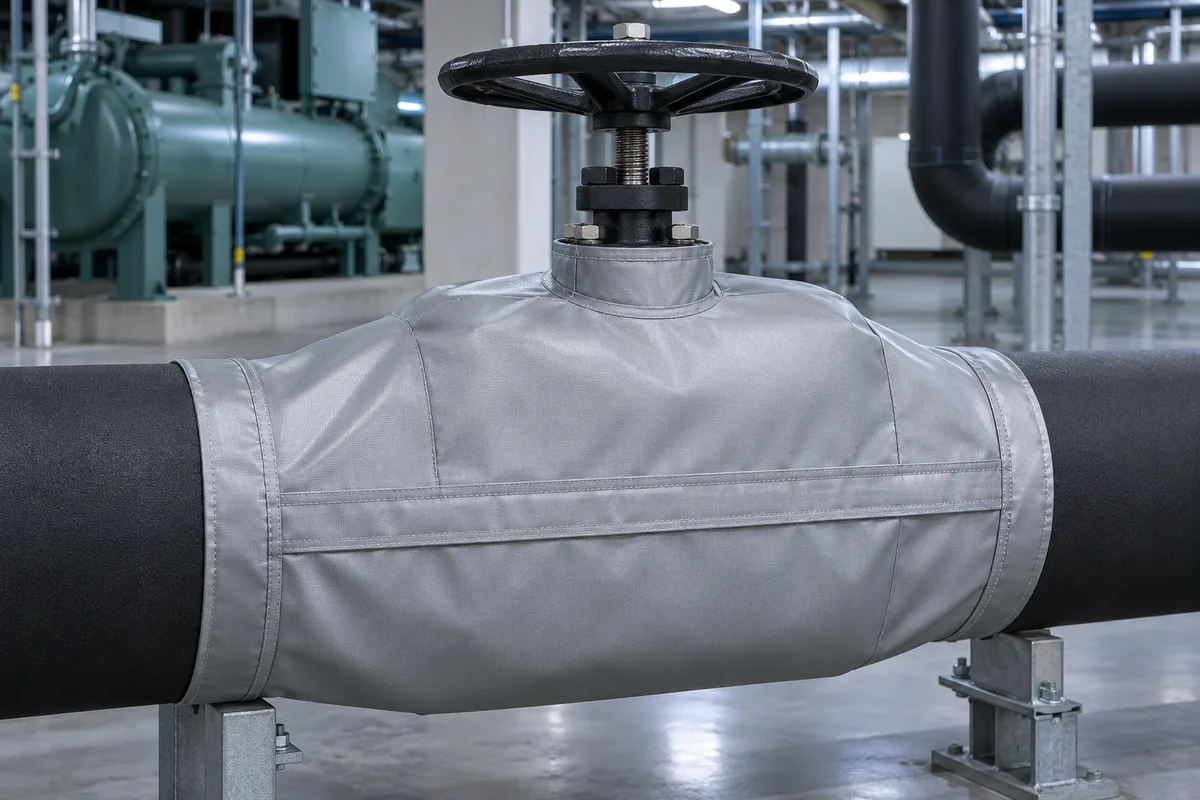
Review the stem collar, removable seam and both transitions to the adjacent pipe insulation.
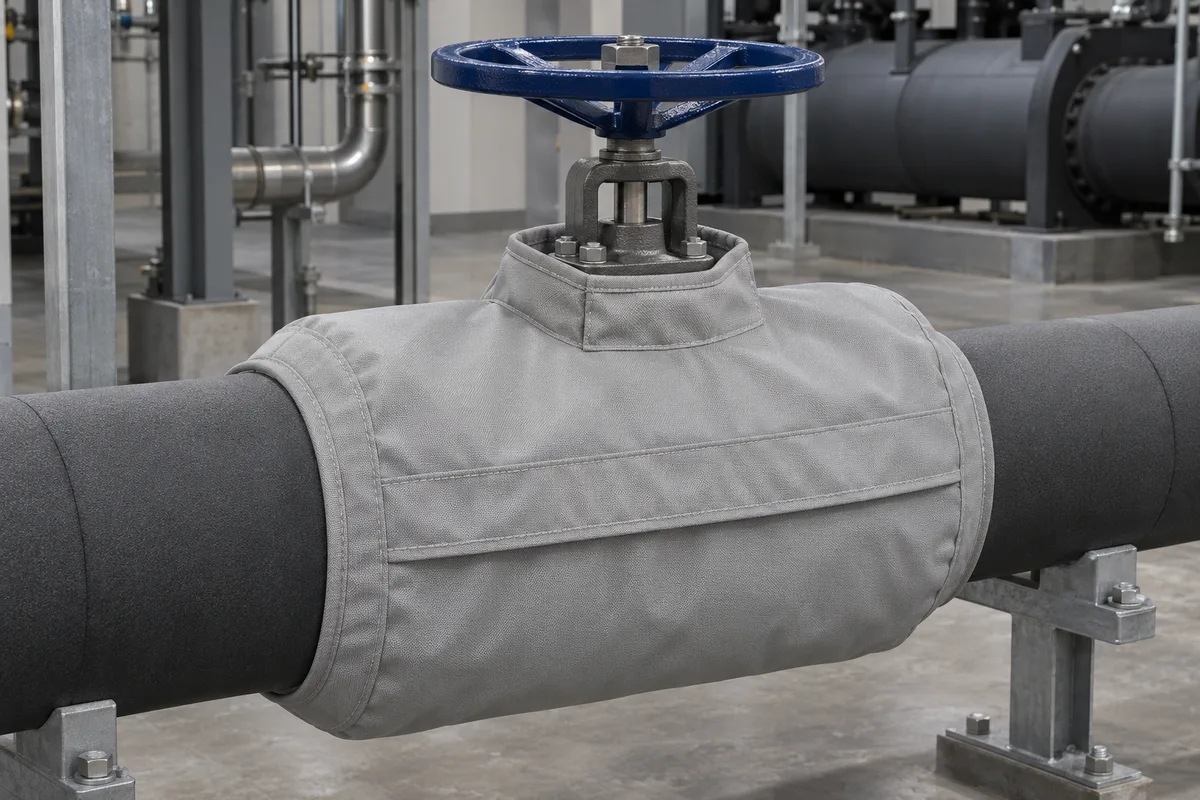
Compare alternate views and see how the jacket opens, fits or fastens.
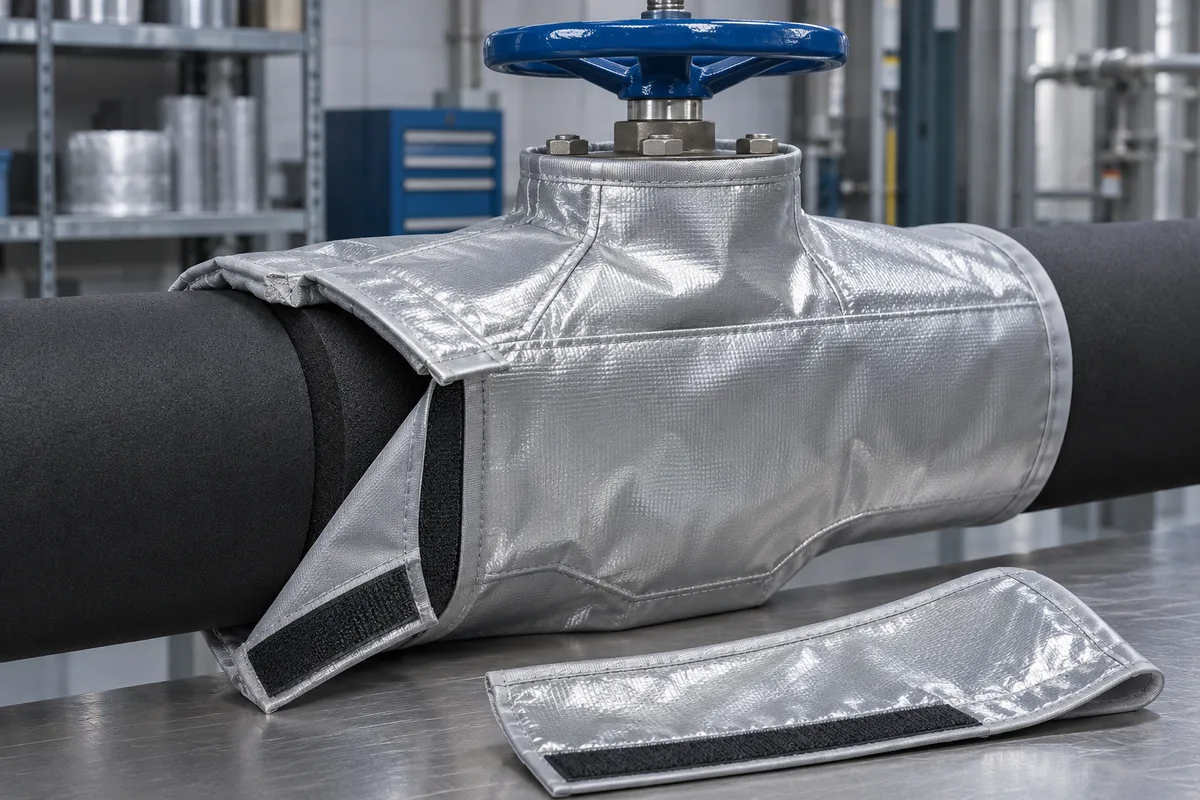
A continuous vapour-control layer around the stem, closure and end transitions addresses weak points that a plain fabric wrap leaves open.
These are options for a custom quotation. Confirm the assembled materials, dimensions, service limits and finish in writing.
review the closed-cell layer and how the vapour seal joins adjoining insulation.
Keep the coldest accessible outer surface above site dew point under agreed humidity conditions; inspect seams and metal penetrations.
Agree the conditions, measurement points and target for the proposed cover before quoting. Record the complete assembly’s approved service limits separately from the target outside-face temperature.
Compare thickness, surface temperature and heat loss →Use the air temperature and relative humidity around the installed fitting. With 7 °C chilled water, the design must keep the coldest exposed jacket surface above the site dew point, with an agreed margin.
This indoor estimate uses the Magnus formula over water. It establishes a surface target. Thickness depends on fitting geometry, conductivity and the vapour-control design. Check seals, stem openings and pipe transitions after refitting.
Armacell condensation-control bulletin · WMO humidity formulaCheck for visible condensation at representative operating conditions, then repeat after removal and refitting.
See inspection and acceptance checks →Send minimum fluid temperature, ambient temperature and humidity, existing insulation details and access frequency.
Include a drawing or scaled photos, quantity and delivery location. Once the key measurements are available, we can review a CAD drawing or annotated design together.
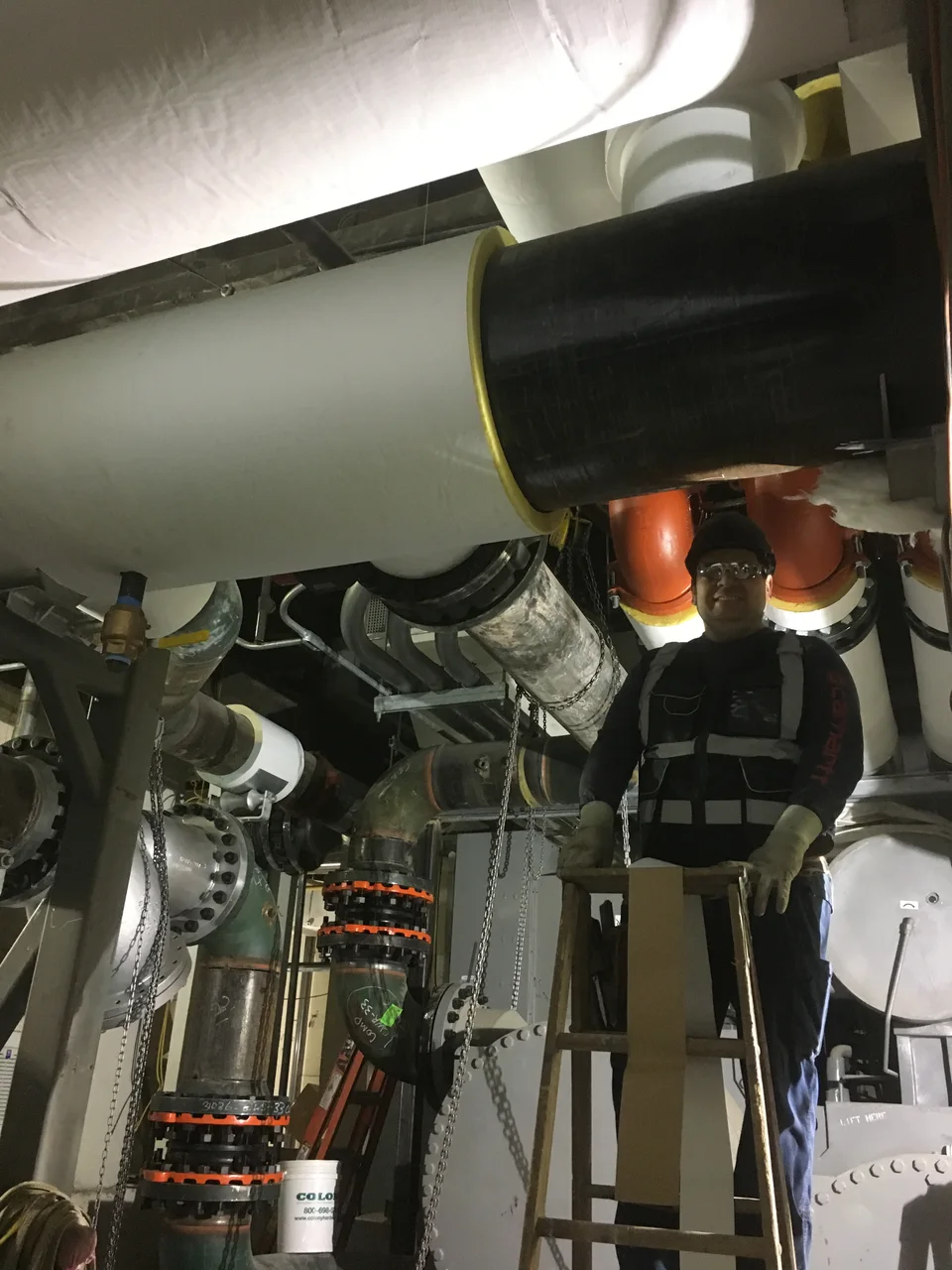
Use a site photo like this to show nearby pipework, access obstructions and service points. Send your own photos from two angles, with a scale reference in the same plane as the dimensions.
Prepare a photo set →